

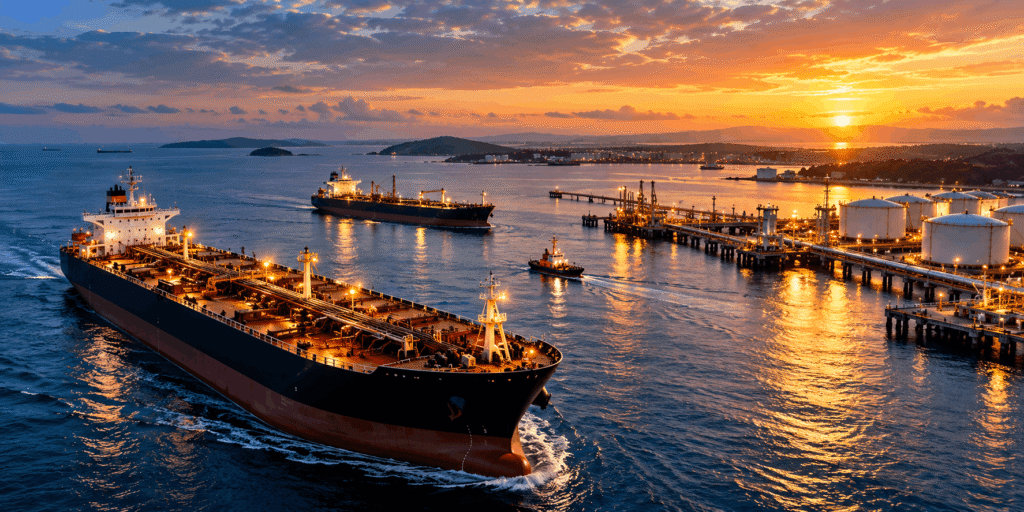
The Gulf of Guinea has long been one of the world’s most important energy-producing regions, serving as a critical link between African hydrocarbon resources and international markets. Stretching along the western coast of Africa, the region plays a significant role in global crude oil, condensate, liquefied petroleum gas (LPG), and refined product supply chains.
As global energy markets continue to evolve, the Gulf of Guinea remains a strategic hub where production, transportation, and international trade converge.
A Region Rich in Energy Resources
The Gulf of Guinea is home to some of Africa’s most significant oil and gas reserves. Countries within the region have developed substantial upstream and midstream infrastructure that supports the production and movement of energy commodities to international markets.
The region’s resource base includes:
- Crude Oil
- Condensate
- Natural Gas
- LPG
- Refined Petroleum Products
These resources contribute to both regional economic development and global energy security.
A Key Gateway to International Markets
One of the Gulf of Guinea’s greatest strengths is its geographic position. Located between major consumption markets in Europe, North America, the Middle East, and Asia, the region provides direct access to important global shipping routes.
Energy cargoes originating from the Gulf of Guinea can efficiently reach:
- European refining centers
- Mediterranean markets
- North American buyers
- Asian demand hubs
- Emerging energy markets worldwide
This connectivity helps diversify global supply sources and enhances market flexibility.
Supporting Global Energy Security
In an increasingly interconnected energy landscape, supply diversification remains a priority for governments, traders, refiners, and industrial consumers.
The Gulf of Guinea contributes to global energy security by:
- Expanding available supply sources
- Supporting international trade flows
- Enhancing market resilience
- Providing alternative sourcing opportunities
- Facilitating long-term commercial partnerships
As demand patterns shift across regions, the importance of reliable and accessible energy-producing regions continues to grow.
The Importance of Maritime Infrastructure
Shipping plays a central role in the movement of energy commodities from the Gulf of Guinea to destination markets.
Ports, terminals, storage facilities, and offshore loading infrastructure support the efficient movement of products across global supply chains. Tankers departing the region connect producers with refiners, distributors, and industrial consumers around the world.
Efficient logistics and maritime operations remain essential to ensuring timely and reliable deliveries.
Emerging Opportunities
Growing energy demand, infrastructure investment, and evolving trade relationships continue to create new opportunities across the region.
Key areas of development include:
- Increased gas commercialization
- Expansion of LPG markets
- Investment in energy infrastructure
- Growth in regional refining capacity
- Enhanced trading and logistics capabilities
These developments are expected to strengthen the Gulf of Guinea’s position within the global energy ecosystem.
Looking Ahead
The Gulf of Guinea remains a strategically important region within international energy markets. Its combination of resource availability, geographic advantage, and established trade routes positions it as a vital contributor to global energy flows.
As markets continue to evolve, the region will remain an important source of opportunity for producers, traders, logistics providers, and energy consumers seeking reliable connections between supply and demand.